Table of Contents
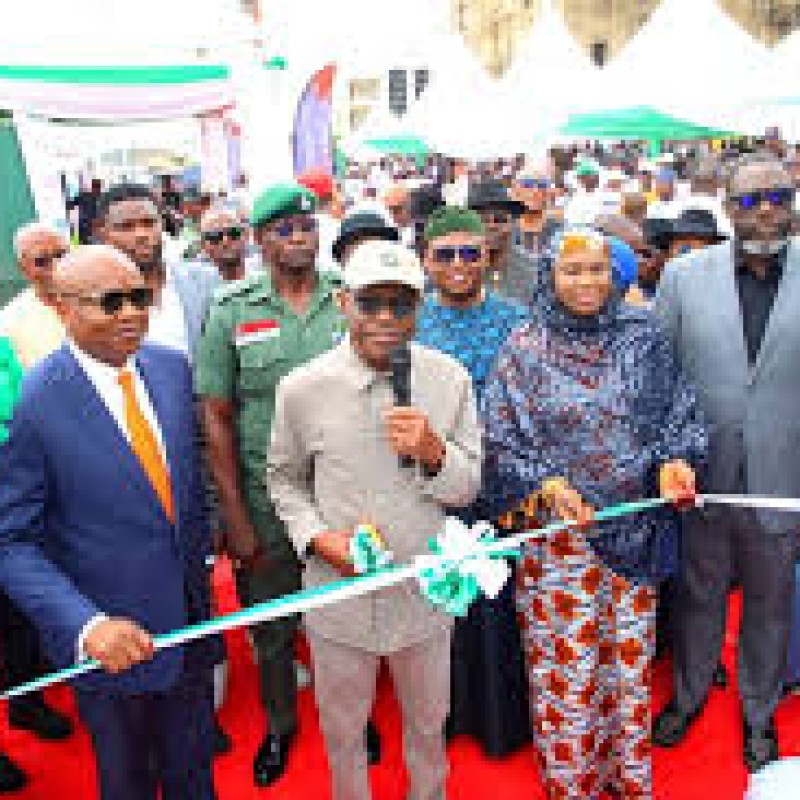
In a move that underscores a renewed focus on human capital development, Minister Nyesom Wike has announced a 20-day commissioning marathon dedicated exclusively to unveiling newly completed public school projects across the Federal Capital Territory. The initiative, led by the FCTA, represents a defining moment in an ambitious education transformation programme that has seen hundreds of classrooms, laboratories, and student facilities rebuilt, rehabilitated, and modernized.
The commissioning exercise marks more than a ceremonial milestone. It signals a deliberate shift in governance priorities—moving beyond roads, bridges, and physical connectivity toward strengthening the intellectual and institutional foundations that underpin long-term social and economic development. By dedicating nearly three weeks to showcasing education projects, the administration is sending a clear message: infrastructure is not only about asphalt and concrete, but also about classrooms, teachers, and students.
A strategic shift toward human capital development
For much of the past year, public attention in the Federal Capital Territory has focused heavily on road construction, transportation networks, and urban renewal. Major arterial roads were rehabilitated, rural access routes expanded, and new linkages established to connect satellite communities to the city centre. While these projects addressed critical mobility and economic needs, the administration has now turned its spotlight to an equally vital sector—education.
The 20-day commissioning marathon represents a symbolic and practical pivot. Rather than unveiling transportation infrastructure alone, the minister’s schedule will take him across schools in urban districts and remote communities alike, highlighting the administration’s investments in learning environments.
Officials say the programme is designed to demonstrate that development is multidimensional. Roads facilitate movement, but schools enable opportunity. Bridges connect communities, but classrooms connect generations to knowledge, innovation, and prosperity.
This shift aligns with a broader national vision under President Bola Tinubu’s Renewed Hope Agenda, which emphasizes human capital as a cornerstone of national development.
The scope of the commissioning marathon
The commissioning exercise will span all six area councils of the Federal Capital Territory, ensuring geographic balance and inclusivity. These councils include Abaji, Kuje, Kwali, Gwagwalada, Bwari, and the Abuja Municipal Area Council.
Each commissioning event will feature newly completed facilities, ranging from rehabilitated classrooms to fully reconstructed school complexes. In some locations, entire schools have been rebuilt from the ground up, replacing aging structures that had deteriorated over decades.
The projects being commissioned include:
- Newly constructed classroom blocks
- Modern science and computer laboratories
- Expanded libraries equipped for digital learning
- Fully rehabilitated student hostels
- Upgraded sanitation facilities
- Solar-powered lighting systems
- Motorized boreholes providing reliable water supply
- Modern furniture for students and teachers
These upgrades reflect a comprehensive approach to education infrastructure, addressing both academic and welfare needs.
From neglect to renewal: the context behind the reforms
For many years, public schools in the Federal Capital Territory suffered from chronic underinvestment. While Abuja developed into a modern capital city with impressive skylines and infrastructure, many public schools—especially in rural and satellite communities—lagged behind.
Students often learned in overcrowded classrooms with broken desks. Laboratories were poorly equipped or nonfunctional. Libraries lacked current materials. Basic utilities such as water and electricity were unreliable.
This disparity created significant inequalities in educational outcomes. Students in well-equipped private schools had access to modern learning tools, while their counterparts in public schools faced structural disadvantages.
Recognizing these challenges, the current administration launched a comprehensive programme to reverse decades of neglect and rebuild the public education system from the ground up.
The whole-school approach: a comprehensive model for reform
One of the defining features of the school rehabilitation programme is its adoption of what officials describe as a “whole-school approach.” Rather than focusing solely on cosmetic repairs, the initiative addresses every aspect of the school environment.
This approach includes:
Structural rehabilitation
Existing buildings are reinforced, repaired, or reconstructed to ensure safety and durability. Roofs, walls, flooring, and windows are replaced where necessary.
Academic modernization
Science laboratories are equipped with modern apparatus, enabling students to conduct practical experiments. Computer laboratories introduce students to digital literacy, preparing them for participation in a technology-driven global economy.
Student welfare improvements
Hostels are rehabilitated to provide safe and comfortable accommodation. Dining halls are upgraded to ensure hygienic food service. Sanitation facilities are rebuilt to meet modern health standards.
Utility infrastructure
Solar-powered lighting ensures reliable illumination even in areas with inconsistent grid electricity. Motorized boreholes guarantee access to clean water, addressing a critical barrier to health and hygiene.
Learning environment enhancement
Modern desks, chairs, and teaching aids replace outdated furniture, improving comfort and supporting effective learning.
Bridging the urban–rural divide
One of the most significant aspects of the commissioning marathon is its emphasis on inclusivity. Rather than concentrating development exclusively in central urban districts, the programme prioritizes schools in rural and underserved communities.
This strategy recognizes that educational inequality often reflects geographic inequality. Students in remote communities historically faced the greatest infrastructure deficits.
By investing heavily in these areas, the administration aims to level the playing field, ensuring that students in rural communities have access to the same quality of educational infrastructure as those in the city centre of Abuja.
This approach is expected to yield long-term benefits, including improved academic performance, increased school attendance, and expanded opportunities for rural youth.
Funding and financial commitment
The scale of the education infrastructure programme reflects significant financial commitment. Billions of naira have been allocated to support school rehabilitation, reconstruction, and modernization.
Officials say funding has been structured to ensure continuity and timely completion. Contractors receive mobilization funds in advance, reducing the risk of project delays or abandonment.
This financial discipline has contributed to the programme’s rapid progress and growing credibility.
The education transformation initiative forms part of a broader capital investment strategy aimed at strengthening public infrastructure across multiple sectors.
Education as the foundation of economic development
Education plays a central role in economic growth and social mobility. By improving school infrastructure, governments invest in the intellectual capital that drives innovation, productivity, and national competitiveness.
Modern classrooms provide environments conducive to learning. Well-equipped laboratories enable scientific exploration. Digital tools expand access to information and global knowledge networks.
These investments contribute to the development of a skilled workforce capable of participating in emerging industries, including technology, engineering, and research.
The commissioning marathon highlights the administration’s recognition that education infrastructure is not merely a social service—it is a strategic economic investment.
Community reactions and public expectations
The education infrastructure programme has generated widespread public interest and anticipation. Communities across the Federal Capital Territory view the commissioning marathon as a visible demonstration of progress.
Parents express optimism that improved facilities will enhance their children’s educational experience. Teachers welcome the upgrades, which enable them to deliver more effective instruction.
Students, perhaps the greatest beneficiaries, now have access to environments that support learning, creativity, and personal development.
Community leaders see the programme as a catalyst for broader social transformation, strengthening confidence in public institutions and governance.
Leadership and administrative coordination
The successful implementation of the education transformation programme reflects coordinated efforts across multiple government departments.
The Education Secretariat, led by Mandate Secretary Danlami Hayyo, has played a central role in planning, monitoring, and executing the rehabilitation projects.
Engineering teams, contractors, education administrators, and policymakers have worked collaboratively to ensure quality and timely delivery.
This level of coordination is essential for managing projects across diverse geographic locations and logistical conditions.
Long-term impact and sustainability
The benefits of the school rehabilitation programme are expected to extend far beyond the immediate commissioning period.
Improved infrastructure contributes to:
- Higher student enrollment and retention
- Better academic performance
- Increased teacher motivation and effectiveness
- Enhanced student safety and well-being
- Greater public confidence in government education systems
Over time, these improvements can translate into broader economic and social gains.
A stronger education system produces a more skilled workforce, attracts investment, and supports national development.
Symbolism and legacy
The 20-day commissioning marathon represents more than a series of official ceremonies. It symbolizes a broader transformation in governance priorities.
By dedicating significant time and attention to education infrastructure, the administration is reinforcing the importance of human capital development.
The initiative reflects a recognition that sustainable development depends not only on physical infrastructure but also on intellectual and social infrastructure.
Classrooms, after all, are where future leaders, professionals, and innovators begin their journeys.
Looking ahead
As the commissioning marathon unfolds, attention will turn toward sustaining and expanding the gains achieved so far.
Future priorities may include:
- Continued infrastructure expansion
- Integration of digital learning technologies
- Teacher training and capacity building
- Curriculum modernization
- Strengthening education governance and accountability
These efforts will build on the foundation established by the current programme.
The long-term goal is clear: to create a public education system capable of preparing students for the challenges and opportunities of the 21st century.