Table of Contents
Introduction: A Moment of National Recognition
In a remarkable demonstration of academic excellence and scientific ingenuity, students from the Federal Capital Territory (FCT) emerged among the top performers at the prestigious National Junior Engineers, Technicians, and Scientists (JETS) Competition. Competing against some of the brightest young minds from across Nigeria’s 36 states, FCT students secured multiple top-three positions, particularly in primary and junior secondary innovation categories.
Their achievement represents more than individual brilliance. It signals a transformation underway in Abuja’s public education system—one driven by deliberate investments in infrastructure, teacher support, modern laboratories, and innovation-focused curricula.
Education officials, teachers, parents, and policymakers alike have described the results as a milestone moment. It demonstrates that sustained investment in educational infrastructure and student development can produce measurable outcomes in academic performance, creativity, and national competitiveness.
For the Federal Capital Territory, the success at the national JETS competition is both a validation of ongoing reforms and a preview of even greater achievements to come.
Understanding the JETS Competition: Nigeria’s Premier Science Platform
The Junior Engineers, Technicians, and Scientists (JETS) Competition is one of Nigeria’s most respected academic platforms dedicated to science, engineering, and technological innovation among young students.
Organized annually, the competition aims to:
- Encourage interest in science, mathematics, and technology
- Develop practical problem-solving skills
- Promote innovation among young learners
- Identify future scientists, engineers, and inventors
- Prepare Nigerian students for global technological participation
Students compete in multiple categories, including:
- Basic science innovation
- Engineering design
- Robotics and automation
- Environmental science solutions
- Applied physics and chemistry
- Creative technological inventions
The competition is rigorous and highly competitive. Participants must demonstrate not only theoretical knowledge but also practical innovation—developing working models, prototypes, and scientific solutions to real-world problems.
For many students, success at JETS serves as a launching pad for future careers in science, technology, engineering, and medicine.
FCT’s Standout Performance: Excellence Across Multiple Categories
This year, FCT students distinguished themselves with exceptional performances across several categories, particularly at the primary and junior secondary levels.
Their achievements included:
- Multiple top-three finishes in national innovation categories
- Strong representation in engineering and applied science
- Outstanding performance in problem-solving and prototype design
- Recognition for creativity and originality
Education officials noted that FCT participants demonstrated confidence, technical competence, and originality—qualities that reflect strong preparation and access to quality learning environments.
Observers and judges praised the students’ ability to:
- Translate theoretical knowledge into practical applications
- Develop innovative solutions to real-world challenges
- Demonstrate scientific reasoning and analytical thinking
- Present and defend their projects effectively
Their success highlights the growing strength of Abuja’s public education system in science and technology education.
Infrastructure Investment: The Foundation of Academic Excellence
The success of FCT students did not happen by accident. It is the result of sustained investment in educational infrastructure by the Federal Capital Territory Administration.
Over the past several years, schools across Abuja have undergone significant upgrades, including:
- Renovated science laboratories
- Modern classrooms equipped for digital learning
- Improved libraries with updated educational materials
- Better access to electricity and water supply
- Provision of modern science equipment
These improvements have transformed the learning environment, enabling students to:
- Conduct practical experiments
- Engage in hands-on learning
- Develop scientific curiosity
- Explore innovation and creativity
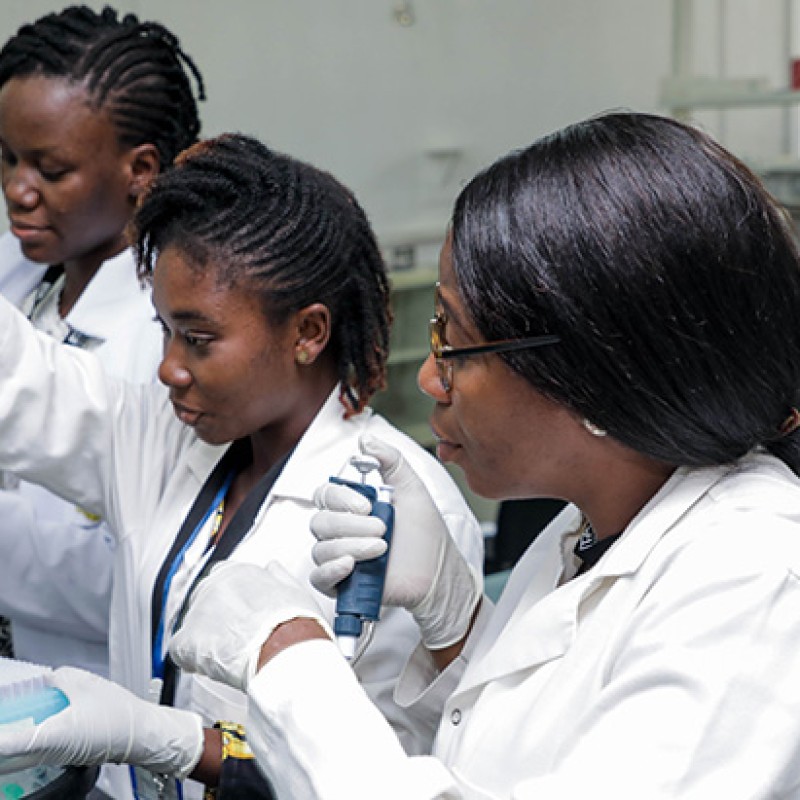
Modern laboratories, in particular, have played a critical role. Students now have access to equipment that allows them to test ideas, build prototypes, and develop scientific solutions.
This practical exposure is essential for preparing students for competitions like JETS.
Teachers: The Driving Force Behind Student Success
Behind every successful student is a dedicated teacher.
FCT educators have played a crucial role in preparing students for national competitions by:
- Providing mentorship and guidance
- Organizing science clubs and innovation programs
- Encouraging experimentation and creativity
- Identifying talented students early
- Supporting project development
Teachers have also received training and professional development to enhance their ability to teach modern science and technology concepts.
This has enabled them to:
- Introduce innovative teaching methods
- Emphasize practical learning
- Encourage critical thinking
- Foster innovation
The dedication of teachers has been instrumental in helping students achieve national recognition.
Science Clubs and Innovation Culture in FCT Schools
Science clubs have become a cornerstone of innovation development in FCT schools.
These clubs provide students with opportunities to:
- Explore scientific concepts beyond the classroom
- Work on creative projects
- Collaborate with peers
- Participate in competitions
- Develop leadership skills
Through science clubs, students gain confidence and develop a passion for innovation.
Many of the students who excelled at the JETS competition were active members of school science clubs.
These clubs serve as incubators for future scientists and innovators.
Student Innovation: Solving Real-World Problems
One of the most impressive aspects of the competition was the ability of FCT students to develop solutions to real-world problems.
Their projects addressed issues such as:
- Environmental sustainability
- Renewable energy
- Waste management
- Public health challenges
- Technological efficiency
These projects demonstrated not only academic knowledge but also creativity and problem-solving ability.
Students showed that they are capable of thinking critically about challenges facing their communities and developing practical solutions.
This is a key objective of science education.
The Role of Government Policy and Educational Reform
Education reforms in the FCT have emphasized science, technology, engineering, and mathematics (STEM).
Key priorities have included:
- Improving school infrastructure
- Supporting teacher training
- Providing learning materials
- Encouraging innovation
- Expanding access to quality education
These reforms have created an environment where students can thrive academically.
Government commitment to education has been essential in achieving these results.
Boosting Student Confidence and Aspirations
Success at national competitions has a powerful impact on student confidence.
It helps students:
- Believe in their abilities
- Develop ambition
- Pursue careers in science and technology
- Strive for excellence
Winning or placing highly in national competitions can change a student’s life trajectory.
It opens doors to scholarships, mentorship opportunities, and future career paths.
Parents and Community Support
Parents and communities have also played a crucial role.
Their support includes:
- Encouraging academic excellence
- Providing emotional support
- Supporting participation in competitions
Community involvement strengthens the education system.
It creates a culture that values learning and achievement.
National Impact: Strengthening Nigeria’s Future
The success of FCT students has national significance.
Nigeria’s future depends on:
- Scientists
- Engineers
- Technologists
- Innovators
Competitions like JETS help identify and develop future leaders in these fields.
Investing in education strengthens national development.
Global Relevance: Preparing Students for the World
The world is increasingly driven by technology and innovation.
Preparing students for this future requires:
- Strong science education
- Innovation opportunities
- Modern infrastructure
FCT’s success demonstrates that Nigerian students can compete at global standards.
This positions Nigeria for future technological leadership.
Challenges and Opportunities Ahead
Despite progress, challenges remain.
These include:
- Expanding access to quality education
- Maintaining infrastructure
- Supporting teachers
- Providing continuous investment
However, the success of FCT students shows that progress is possible.
Continued commitment will yield even greater results.
Looking Ahead: Building on Success
The future looks promising.
Plans include:
- Expanding science programs
- Supporting innovation
- Encouraging competition participation
- Continuing infrastructure development
These efforts will help sustain progress.
Conclusion: A Turning Point for Education in Abuja
The success of FCT students at the National JETS Competition represents a turning point.
It demonstrates that investment in education produces real results.
It shows that Nigerian students can achieve excellence.
It highlights the importance of supporting science and innovation.
Most importantly, it offers hope for the future.
A new generation of scientists, engineers, and innovators is emerging.
And their journey is just beginning.